Kick-off event for the “Alliance for Post-Infectious Diseases: Long COVID and ME/CFS” – November 2025
On 19 November 2025, Federal Ministers Nina Warken and Dorothee Bär launched the new “Alliance for Post-Infectious Diseases: Long COVID and ME/CFS” at a joint kick-off event in Berlin. This marks the beginning of a close cooperation between the Federal Ministry of Health (BMG) and the Federal Ministry of Research, Technology and Space (BMFTR) on these conditions and also in the context of the recently announced “National Decade against Post-Infectious Diseases”. The event, which was attended by experts, patient advocacy groups and relevant public health stakeholders, focused on the research into Long COVID and ME/CFS, the provision of care to those affected and the successful education of children and adolescents living with one of the conditions as well as the consequences for working life.
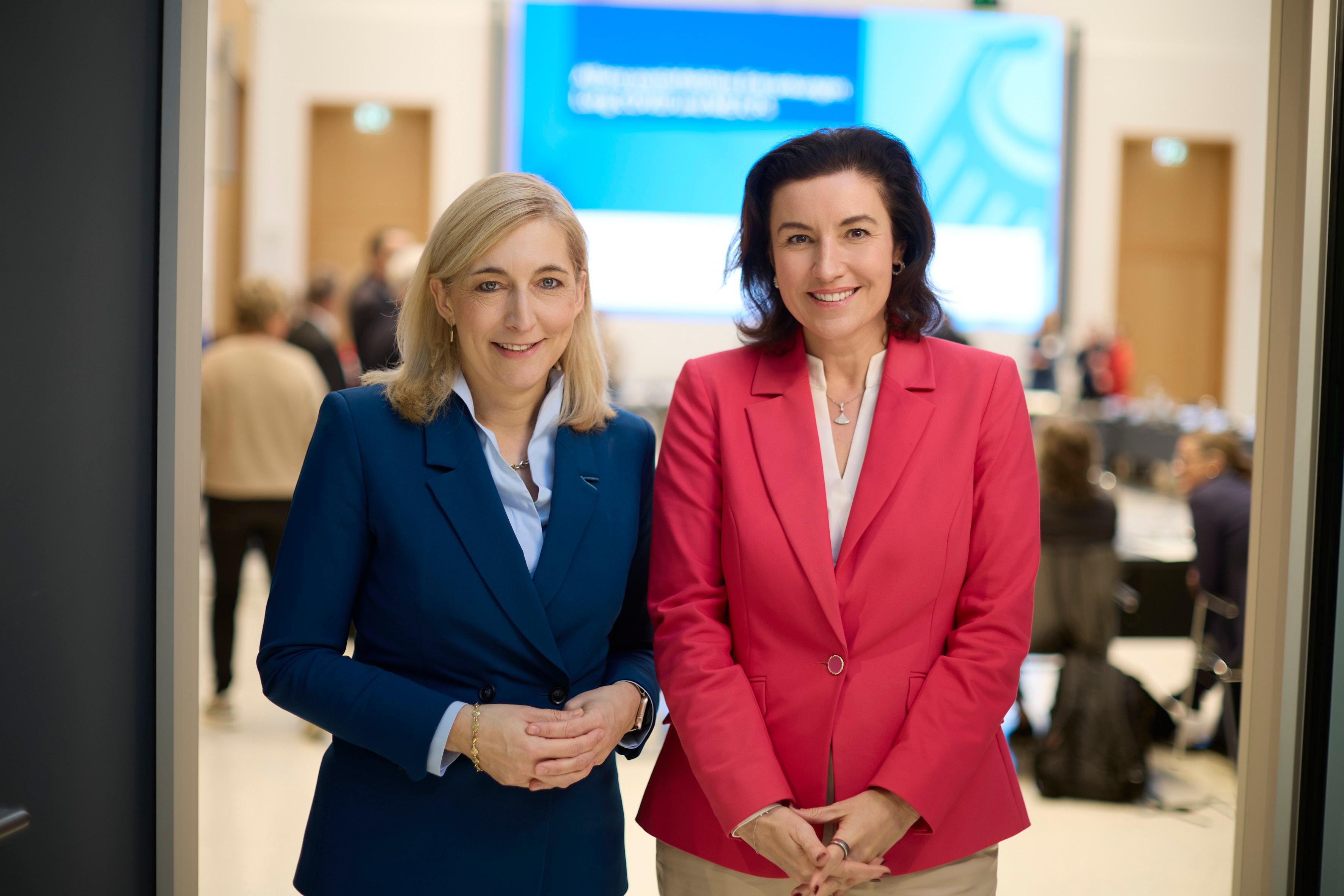
Federal Ministers Warken and Bär launch the “Alliance for Post-Infectious Diseases: Long COVID and ME/CFS”
By establishing the “Alliance for Post-Infectious Diseases: Long COVID and ME/CFS”, the BMG and the BMFTR are sending out a clear signal for closer collaboration between their ministries.
The Alliance aims to strengthen the ties between basic and clinical research on the one hand and healthcare research on the other hand. Progress in diagnosis and treatment is to be accelerated so as to improve patient care. The primary focus is on strengthening the links between science, healthcare practice and patient advocacy groups.
Under the auspices of the Alliance, new and ongoing projects are coordinated across departments and ministries. Until 2028, the BMG alone will provide 118 million euros in funding for 34 projects from the field of healthcare and healthcare research. Additional funding is provided by the Federal Joint Committee (G-BA), which funds another 16 research projects on “post-viral syndromes” via its Innovation Fund with a total of around 30 million euros. The Alliance also complements the “National Decade against Post-Infectious Diseases”, which runs from 2026 to 2036 and has a total budget of 500 million euros.
A dialogue between patients and experts
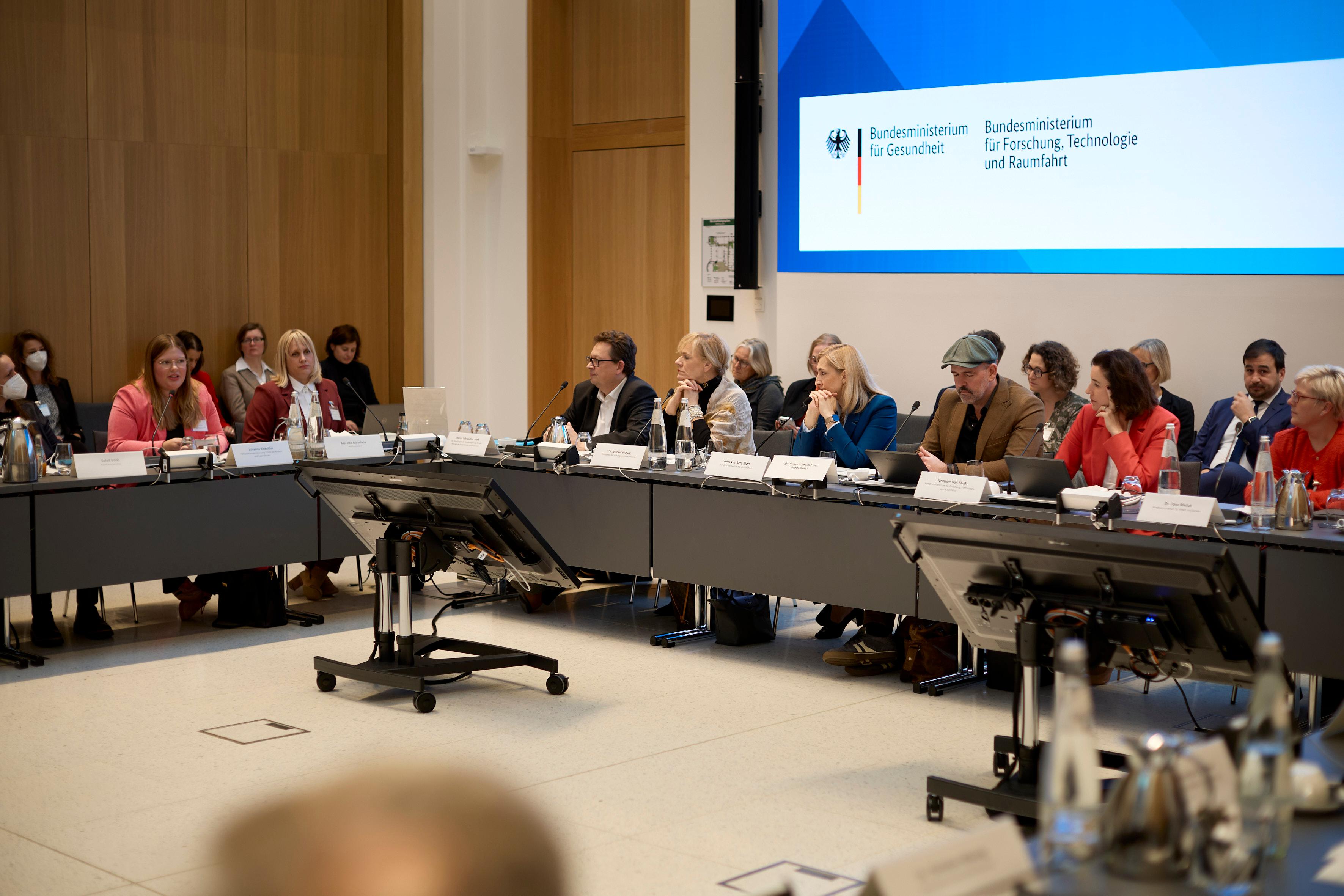
In their opening remarks, Federal Ministers Nina Warken (BMG) and Dorothee Bär (BMFTR) emphasised the topic’s urgent nature and the suffering of those affected. They presented the Alliance as a pivotal component of a whole-of-society strategy with the aim of improving participation and healthcare. Following the statements by the two Federal Ministers, Long COVID and ME/CFS patients talked about their experiences and outlined their everyday challenges and their most pressing needs. During the discussion, they emphasised the need to invest into research, expand care capacities, use and disseminate the existing knowledge and increase the involvement of patient advocacy groups to advance patient-centred approaches.
Following the discussion, experts presented current developments and projects from four focus areas.
Research on Long COVID and ME/CFS
The first topics to be presented were the basic research into the underlying mechanisms of the diseases, which is funded by the BMFTR, and the clinical research into medicines to treat them. It became clear that the pathogenesis of post-infectious syndromes remains largely unknown. This is why it is imperative to make use of synergies and overlapping areas in research by strengthening national as well as international collaboration.
With regard to clinical studies for medicines, it was underlined that various disease manifestations and underlying mechanisms need to be taken into account. To achieve this, patients must be selected more specifically and divided into appropriate sub-groups. Research needs to be performed on each individual sub-group in order to develop targeted treatment approaches.
Improving the care of patients with Long COVID and ME/CFS
The BMFTR’s research projects are complemented by the BMG-funded research on care provision and patient-centred care. The “LongCARE” coordination project was presented, which coordinates 30 research projects from the funding priority of patient-centred research into Long COVID and ME/CFS. The projects work towards improving care as well as the use and exchange of data and seek to standardise data sources. Initial results will be presented on 22 January 2026 at a symposium in the context of the NUM Convention. As part of the DMEA, which is the leading digital health conference and takes place in April 2026, a dialogue with industry is envisaged on topics such as the use of fitness trackers in Long COVID care.
Another project presented was “PEDNET-LC”, a consortium project with specialised outpatient clinics across Germany that is part of the BMG’s funding priority on care for children and adolescents with Long COVID and conditions with similar causes or manifestations. The central element of the project is the establishment of comprehensive care centres in each Federal Land that will be dedicated to providing age-appropriate medical care to children and adolescents. A superordinate national comprehensive care centre is being set up to act as a national virtual hospital by building up health literacy and establishing communication structures that are in line with data protection regulations.
One GP stated clearly that there was currently no nationwide healthcare in this regard. According to her report, many practices lacked sufficient knowledge about how the disease can progress and how it can be diagnosed. It was suggested that a case management approach to streamline patient care might be a strategy to meet the demand for comprehensive and time-consuming examinations.
Keeping up at school in spite of Long COVID and ME/CFS
The "Long COVID among children and adolescents" participation process identified participation in their usual classes as one key challenge for affected pupils. This is why ways to better support young patients were also highlighted during the event. The “TRU School” project, which as a sub-project of “PEDNET-LC” is also funded by the BMG, is developing measures to better support students with Long COVID and similar illnesses following a viral infection. For example, research is being conducted on how frequently Long COVID leads to school absenteeism and whether digital offerings can improve the participation of affected students in lessons.
In collaboration with affected children and adolescents, parents, professionals and schools, informational and support services are being tested in several Federal Länder.
Long COVID and ME/CFS in working life
The fourth focus area drew attention to the challenges faced by those affected when returning to work and highlighted possible ways to provide support. Measures and current developments in the areas of occupational early reintegration, retirement and recognition as an occupational accident and occupational disease were presented. In this context, the importance of medical rehabilitation for the treatment of Long COVID was also emphasised. Participants stressed the need for more tailored support, digital services and concepts for providing long-term assistance to people returning to work. Especially people with post-exertional malaise need to avoid excessive exertion to prevent their symptoms from worsening (crash).
During the final discussion, both Federal Ministers emphasised that the kick-off of the Alliance was an important step towards pooling the efforts around Long COVID and ME/CFS, strengthening the links between relevant stakeholders and creating synergies. They stated that the many different perspectives represented were key to advancing the care and research in the field of Long COVID and ME/CFS for the benefit of those affected and to providing the best possible support to those affected and their families.
The Alliance sees itself as a kick-off for a series of events that will further advance networking and the exchange of information. The next opportunity for dialogue will be the NUM Convention, which will take place on 22 January 2026.