
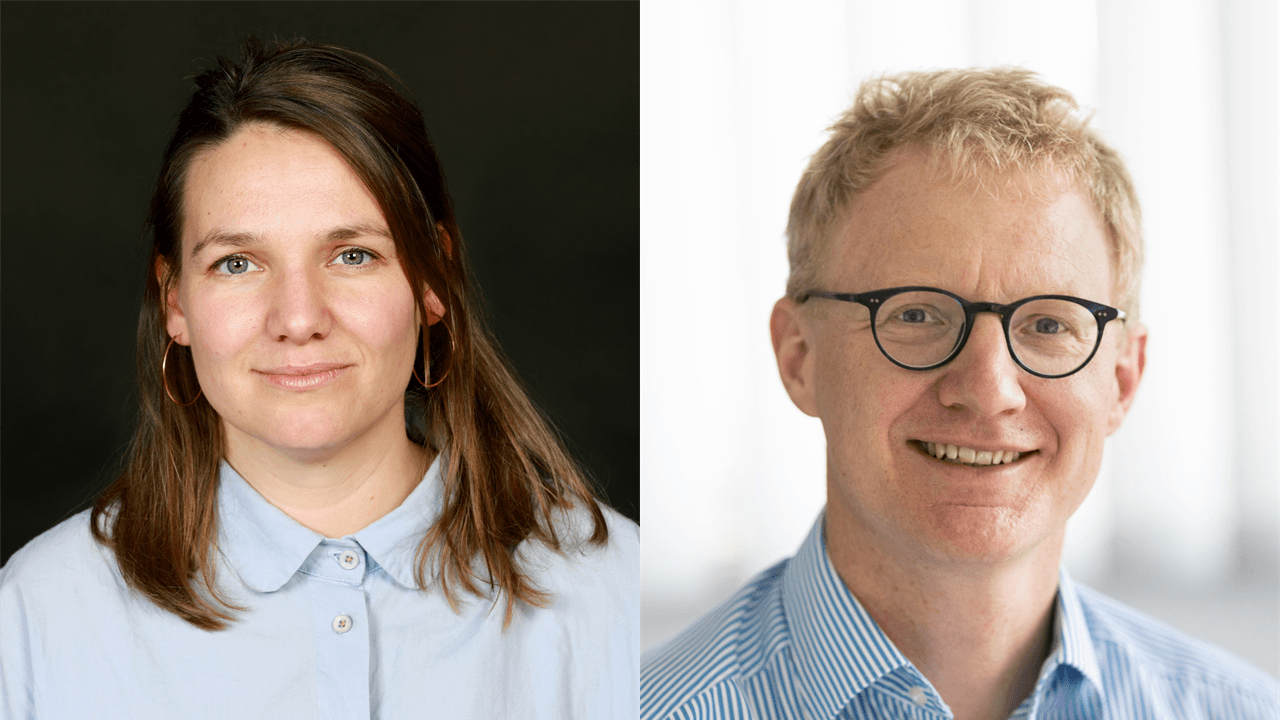
Guest article: Ronja Büchner & Georg Schomerus
Ronja Büchner and Prof. Georg Schomerus show in their guest article that people with Long COVID and post-vac syndrome often experience stigmatisation and psychologisation.
Published 18.12.2025
“‘Have you considered that it could be burnout?’—psychologization and stigmatization of self-reported long COVID or post-COVID-19 vaccination syndrome”
The results of our survey published in summer 2025 on the stigmatisation of people with Long COVID (LC) and post-vac syndrome (PVS) are unambiguous: 89% of the more than 2,053 persons surveyed (of whom 1,398 with LC and 655 with PVS) have experienced stigmatisation (Büchner et al., 2025). Experiencing stigmatisation is often closely linked to experiencing “psychologisation” (reportedly also very frequent) of the illnesses. Psychologisation refers to overemphasis of the role of psychological factors in the development, chronification or continuity of LC and PVS.
We developed a new scale and new items to record psychologisation, as no studies have dealt with this subject before now. 84% of those surveyed report experiences of psychologisation, primarily during interactions with medical professionals or therapists, but also with family and friends as well as in dealings with the authorities and with colleagues. Psychologisation was experienced as a severe emotional burden, regardless of where it came from.
Our data thus confirms what numerous affected persons have reported and what had already been demonstrated in qualitative studies, namely that there is a clear link between stigmatisation and psychologisation. The models we calculated identify psychologisation as a key mechanism behind the stigmatisation of people with LC and PVS. Conversely, this means by countering the psychologisation of these illnesses, we can help destigmatise them.
The rejection of psychologisation by those affected is unrelated to the stigma attached to mental illness. It is not about refusing a psychiatric diagnosis that may have been experienced as stigmatising. Instead, it is about having your own illness classified as being just as physical as multiple sclerosis (MS), for example. This is also demonstrated by the survey data. Those data are currently being prepared for publication.
In the study already published, we also observed that stigmatisation and psychologisation were statistically correlated with unfavourable outcomes. For example, higher levels of stigmatisation and psychologisation were associated with lower life satisfaction and self-esteem as well as with an increased loss of trust in medicine, disclosure concerns and more loneliness, depression and anxiety.
Believing those affected and learning from them – also in research and care
In a new project starting in January 2026, we will examine the barriers to treatment from the perspective of doctors and for the first time – to our knowledge – systematically survey a large-scale sample of those treating Long COVID and ME/CFS (Myalgic Encephalomyelitis/Chronic Fatigue Syndrome). The project is supported by the Innovation Committee of the Joint Federal Committee (more information: https://innovationsfonds.g-ba.de/projekte/uncover.767).
The research project will be supported by an advisory council comprised of persons affected. It will be actively involved in developing the survey. We want to document and evaluate this participatory approach because we are convinced that in order to improve the research into and care of people with Long COVID and ME/CFS, we need to listen to those affected and work with them. The history of ME/CFS demonstrates unequivocally that stigmatisation and psychologisation have shaped the discussion for far too long and, alongside a lack of research and care, undermined trust in medicine and science. We now have to win back this trust – something we can only do together with those affected.
Vita
Ronja Büchner, M. Sc., is a psychologist and research associate in the working group “Psychiatry and Society” led by Prof. Georg Schomerus at Leipzig University. Within the working group, she shares responsibility with Prof. Schomerus for the topics Long COVID, ME/CFS and PAIS, and her PhD deals with the stigmatisation of people with post-viral diseases. She is also training to become a psychology-based specialist in psychotherapy.
Prof. Dr. Georg Schomerus is Chair of the Department of Psychiatry and Psychotherapy at University of Leipzig Medical Center. He has been carrying out research into the stigma of mental illness for more than 20 years. With the beginning of the COVID-19 pandemic, this focus extended to include the stigma of Long COVID and ME/CFS. He is the author of more than 250 academic publications and is viewed internationally as one of the leading researchers in the field of stigmatisation.
Sources:
Büchner, R., Sander, C., Schindler, S. et al. “Have you considered that it could be burnout?”—psychologization and stigmatization of self-reported long COVID or post-COVID-19 vaccination syndrome. BMC Med 23, 488 (2025). https://doi.org/10.1186/s12916-025-04335-0